Discover Knowledge,
Culture, and Opportunity
Experience world-class innovation, hands-on learning, and cultural diversity in the heart of Europe.
Germany prepares you for success in a globally connected world.

40+
Universities
€10k-25k
Annual Tution Fees
400k+
International Student
1.5 yrs
Post Study Work
Why Study in the Germany?
Globally Respected Degrees
German qualifications are highly valued worldwide, opening doors to international career opportunities.
Affordable Education
Most public universities in Germany offer low or no tuition fees, making quality education accessible to everyone.
Strong Industry Links
Germany’s close connection with global companies offers students real-world exposure through internships and research projects.
Innovation at the Core
From engineering to technology, Germany leads in cutting-edge research and hands-on learning environments.
Work Opportunities
International students can work part-time while studying and stay after graduation to build their careers.
Cultural Diversity
Experience a mix of traditions, modern lifestyles, and international communities in a welcoming, inclusive society.
Gateway to Europe
Studying in Germany lets you explore Europe easily — with travel, learning, and adventure all in one place.
List of Universities in Germany
Technical University of Munich
Popular for Computer Science
QS World Ranking 37
Ludwig Maximilians University Munich
Popular for Data Science
QS World Ranking 54
Heidelberg University
Popular for Law
QS World Ranking 87
Freie Universität Berlin
Popular for Archaeology
QS World Ranking 98

Karlsruhe Institute of Technology
Popular for Biomedical Engineering
QS World Ranking 102
RWTH Aachen University
Popular for Mechanical Engineering
QS World Ranking 106
Humboldt University Berlin
Popular for Business
QS World Ranking 120
Technische Universität Berlin
Popular for Physics
QS World Ranking 154
University of Freiburg
Popular for Theology
QS World Ranking 192
Universität Hamburg
Popular for Business Administration
QS World Ranking 205
Strong Industry Connections
Your Path to Europe
World-Class Education
Affordable Tuition Fees
Trending Courses in Germany
Studying in Germany offers international students outstanding career opportunities. Here are some of the most sought-after courses in Germany for international students.

Engineering
Engineering in Germany provides advanced education in fields such as robotics, civil, and aerospace engineering, with excellent career prospects and high demand across various industries.

Automotive Engineering
Germany provides advanced education in areas such as vehicle design, manufacturing, and sustainable mobility, with strong career prospects and high demand in the automotive industry.

Renewable Energy
Germany offers advanced education in fields such as solar, wind, and hydro power, with strong career prospects and high demand in the sustainable energy sector.

Business & Management
Business management in Germany provides advanced education in areas such as finance, marketing, and entrepreneurship, with strong career prospects and high demand in global industries.

Data Science

Computer Science
The True Cost of Studying in the germany
Tuition Fees (Average per annum)
Bachelor’s
Master’s
Accommodation (Average per month)
Student Dormitories
Private Housing
Amount In (EURO)
EUR 8,000 – 10,000
EUR 10,000 – 12,000
Amount In EURO
EUR 180 – 330
EUR 400 – 600
The True Cost of Studying in the Germany
Tuition Fees (Average per annum)
Bachelor’s – EUR 8,000 – 10,000
Master’s – EUR 10,000 – 12,000
Accommodation (Average per month)
Student Dormitories – EUR 180 – 330
Private Housing – EUR 400 – 600
Scholarship Opportunities in Germany
International students with outstanding academic performance can apply for various scholarships to support their studies in Germany. While these scholarships may not always cover the full cost of education, they can significantly reduce tuition fees and living expenses, easing the financial burden. However, securing a scholarship in Germany is highly competitive, as many are awarded based on merit. Each scholarship usually has a separate application process, often through universities, government bodies, or private organizations.
Key Points About Scholarships in Germany:
- Merit-Based and Need-Based Scholarships – Many scholarships are awarded based on academic excellence, while some also consider financial need.
- Public and Private Funding Options – Scholarships are offered by universities, government programs like DAAD (German Academic Exchange Service), and private foundations.
- No Tuition Fees at Public Universities – Most public universities in Germany charge little to no tuition fees, making scholarships useful mainly for covering living expenses.
- Competitive Application Process – Applicants often need strong academic records, recommendation letters, and a compelling statement of purpose.
- Multiple Scholarship Opportunities – Applying to several scholarship programs increases the chances of receiving financial aid.
Prospective students should research thoroughly, check eligibility criteria, and apply to multiple scholarships to maximize their chances of securing financial assistance for studying in Germany.

germany Career Opportunities
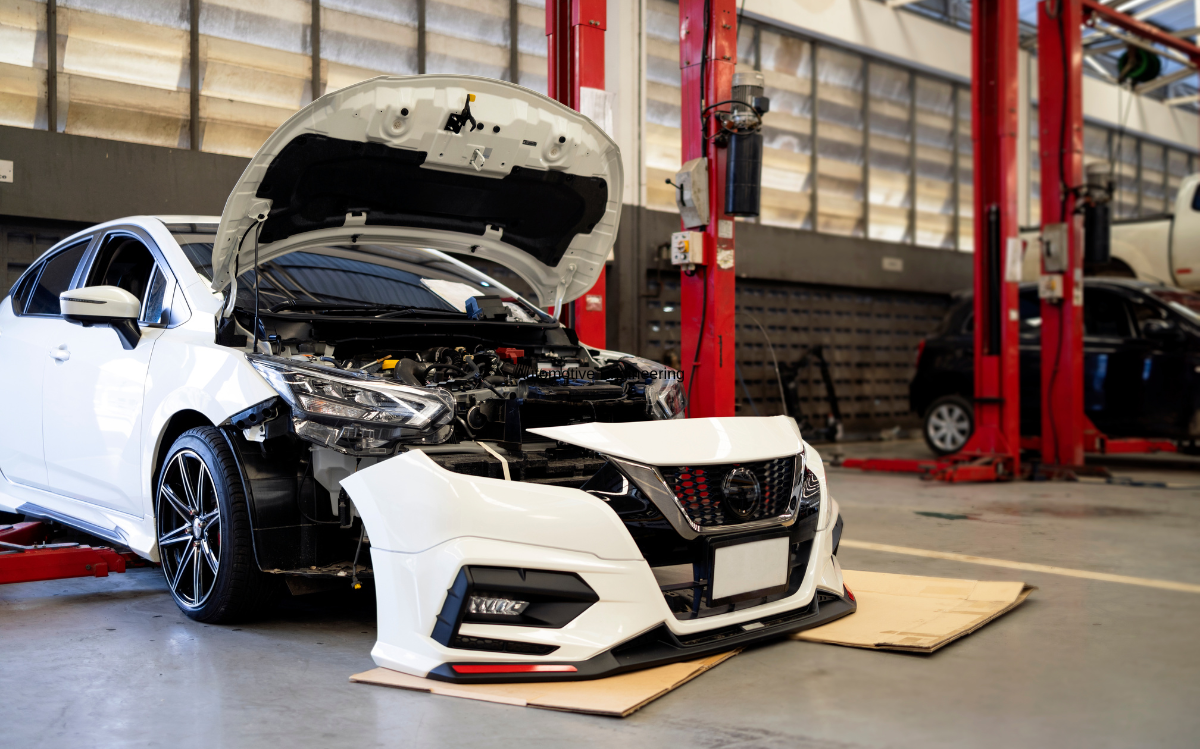
Automotive Engineering

Mechanical Engineering

Computer Science

Business & Management
Data Science

Engineering

Documents required to study in germany
- Valid Passport
- 1 copy of your passport’s data page
- 3 passport pictures according to biometric specifications
- Cover letter from applicant explaining the exact purpose and duration of stay
- Letter of admission from German university
- Proof of payment of study fees, if applicable
- Proof of language proficiency in English and/or German (ONLY if course is taught in German)
- Proof of other academic qualifications, if applicable
- Proof of financial means to cover the costs for the time of your studies by one of the following
- Documents:
– Confirmation of scholarship/ stipend
– “Verpflichtungserklärung” (FOL) by sponsor living in Germany
germany Study Visa Process
- Apply at least six months prior to your intended start date.
- Apply for Akademische Prüfstelle or APS (Academic Evaluation Centre)
- Processing of offer letter typically takes 2-3 weeks (varies from university to university).
- Pay one year’s tuition fees upon receiving the offer letter.
- Set aside funds for living expenses, deposited in the form of Block Account.
- Purchase Travel Insurance and Health Insurance
- Apply for a visa online
- Deposit visa application form, along with the passport, supporting documents and 3 passport size photographs at the VFS and complete biometrics as per the appointment.

Success Stories
-

Would really like to appreciate the effort that Zaak International took for me. I have got my Visa and flying soon to UK as a student. You guys really made me believe that dreams really come true, everything is possible and you guys have solution for every problem or every situation. Thank you so much for your kind support, Mr Abdul Karim sir and Mr Ali Siddiqui sir.
-
I’m so grateful to Zaak International for all their guidance and support throughout my UK student visa process. They made everything so simple, clear, and stress-free. Truly appreciate their efforts!
-
I I am truly grateful to [zaak international] for their incredible support throughout my UK student visa process. From the very beginning, they guided me with patience and clarity, ensuring I understood every step. They were always available to answer my queries, provide updates
-
I am pleased to share that I successfully obtained my UK student visa with the assistance of Zaak international careers. Their team provided comprehensive guidance at every stage of the application process. I would like to extend a special note of gratitude to Ali Sir for his exceptional support and help.
-
"I'm writing to express my sincere gratitude to (KARIM SIR) and Team . The visa and college application process can be overwhelming, but (ALII Sir) made it an incredibly easy and smooth experience. Their guidance and attention to detail were invaluable. They handled all the complexities, which allowed me to focus on other important things. I truly appreciate their professional and hassle-free support, and I highly recommend their services to anyone."
-
I am incredibly thankful to Kareem Sir, Ali Sir, and the entire team at Zaak International Careers for their outstanding support throughout my UK student visa process. Their expertise, patience, and personalised approach turned a potentially stressful journey into a smooth and efficient experience. From admission to visa approval, they were always available to address my queries with professionalism and care. Thanks to their dedication, I am now one step closer to achieving my dream of studying abroad. I highly recommend Zaak International Careers to anyone looking for reliable and expert guidance for overseas education.
-
I recently got my visa for UK for September 2024 intake and i will be flying soon to London and it is only happening because of ZAAK INTERNATIONAL CAREERS. I will highly recommend the ZAAK INTERNATIONAL CAREERS for the students who are struggling with their future studies in abroad. I would say it’s one of the best consultancies in Mumbai. If you are looking for smooth and exceptional service and the best co-ordination at each step throughout the process, then ZAAK INTERNATIONAL CAREERS is the only best option. I would like to thank KARIM SIR and ALI SIR for helping and guiding me throughout all process and helping me to take one step closer to build my career.
-
I recently got my visa for UK for October 2024 intake and i will be flying soon to London and it is only happening because of ZAAK INTERNATIONAL CAREERS. I will highly recommend the ZAAK INTERNATIONAL CAREERS for the students who are struggling for their future studies in abroad. My experience was awesome. I’ ve received my UK Visa that to in a very short period. I thank ZAAK INTERNATIONAL CAREERS and the whole team!!
-
I am very grateful to Zaak international to helping me to achieve my dream of getting UK Visa. Specially Karim Sir & Ali Sir are very supportive and help a lot with all documentation. Also, I got my Visa within a week. My application was processed very smoothly and efficiently within 3 months without any issues.
-
First and foremost, I want to express my gratitude to the entire team at Zaak International Career, particularly Karim Sir and Ali Sir, for their exceptional support throughout this journey. Their professionalism and unwavering support have truly made a difference. I am pleased to share that I have received my UK Student Visa, and I am grateful for the efforts of the entire team. I wholeheartedly recommend Zaak International Careers to anyone looking for guidance in pursuing education abroad.
-
Zaak International Careers in Fort exceeded my expectations at every turn. Under the expert guidance of Ali Sir and Karim Sir, I felt confident and supported throughout my study abroad journey. Their deep knowledge of the process and commitment to my success were truly remarkable. They addressed all my questions with patience and clarity, making what could have been a daunting experience incredibly manageable. I highly recommend their services to any student aspiring to study abroad.
-
This isn't just one of the best agencies; it is the best. Karim and Ali sir helped me like elder brothers. From enrollment to booking the flight ticket, there wasn't a single moment where I lost trust in them. I have also received my UK visa because of them. I must say Zaak International Careers will definitely make your dreams come true.
-
Thank you, Zaak Careers, for providing excellent guidance with my student visa and university admission in UK. I am truly grateful to Kareem Sir and Ali Sir for their guidance and support throughout my process. Professional, reliable, and highly recommended for study abroad aspirants.
-
I would like to thank Kareem sir and Ali sir and the entire team of Zaak International Careers for their exceptional support throughout my admission and visa application process. Your expertise and encouragement made this journey smooth and strees-free. I will highly recommend Zaak International Careers to anyone seeking assistance for education abroad.
-
I am glad to thank Karim sir and M Ali sir for helping me to get UK Visa. The process was very smooth everything was taken care by Zaak International Carriers. I am flying to UK soon.
-
I had a Great Experience with Zaak International Careers. The whole team was Supportive Informative and Helpfully. Thank you for Uk Visa.
-
I am thrilled to share my positive experience with Zaak International Careers! From the moment I reached out to them, their team has been incredibly supportive, professional, and attentive to my needs. They guided me through every step of the student visa application process, providing clear instructions and valuable advice. Their expertise and dedication were evident throughout the entire journey. They promptly answered all my questions, kept me updated on the progress, and ensured that I had all the necessary documents in order. Thanks to their hard work and commitment, I successfully received my student visa without any issues.












Frequently Asked Question
What documents are required to study in Germany?
You’ll need a valid passport, academic transcripts, proof of English or German language proficiency, a university admission letter, and proof of financial means.
How much does it cost to study in Germany?
Public universities usually have little to no tuition fees, but students should budget €800–€1,200 per month for living expenses.
Are scholarships available for international students in Germany?
Yes, several scholarships are available such as DAAD, Erasmus+, and university-specific funding programs.
Can international students work while studying in Germany?
Yes, students can work up to 120 full days or 240 half days per year alongside their studies.
Is knowledge of the German language mandatory to study in Germany?
Many programs are taught in English, but learning German helps with daily life, internships, and career opportunities.
Is Germany a safe and welcoming country for international students?
Absolutely. Germany is known for its safety, multicultural atmosphere, and strong support for international students.